Philippines & Japan - November 2025
Our second month-long family trip to the Philippines was greatly improved by lessons we learned the first time around. Despite a few minor hiccups like a flat tire and some unpredictable weather, everything went quite smoothly. We explored three new-to-us destinations – Bohol, Coron, and Cebu – using our hometown of Paniqui as a base. This setup was perfect: it allowed us to leave most of our heavy luggage behind and travel light. The biggest change this time? While during our previous trip most of our destinations were reachable by car (except for Boracay), these new places required us to hop on planes for every leg of the journey.
BOHOL
Overview:
Our first destination was Bohol, an island province consisting of the main island of Bohol and 75 smaller surrounding islands. Famous for its unique natural wonders (most notably, the Chocolate Hills, a unique geological formation of well over a thousand cone-shaped hills resembling Hershey's Kisses that turn rich brown during the dry season, hence the name), white-sand beaches (with Alona Beach on Panglao Island being the most famous one), rich marine life (great for snorkeling and diving, especially around Balicasag Island), Tarsiers (tiny primates known for their enormous eyes), and historic Spanish-era churches (with Baclayon Church being one of the oldest stone churches in the Philippines), Bohol is currently one of the country's top trending vacation spots that attracts a growing number of both domestic and foreign tourists alike. Bohol is also known for its adventure-packed environment, offering many thrilling outdoor activities, including off-roading, ziplining, kayaking, caving, and waterfall trekking, among others.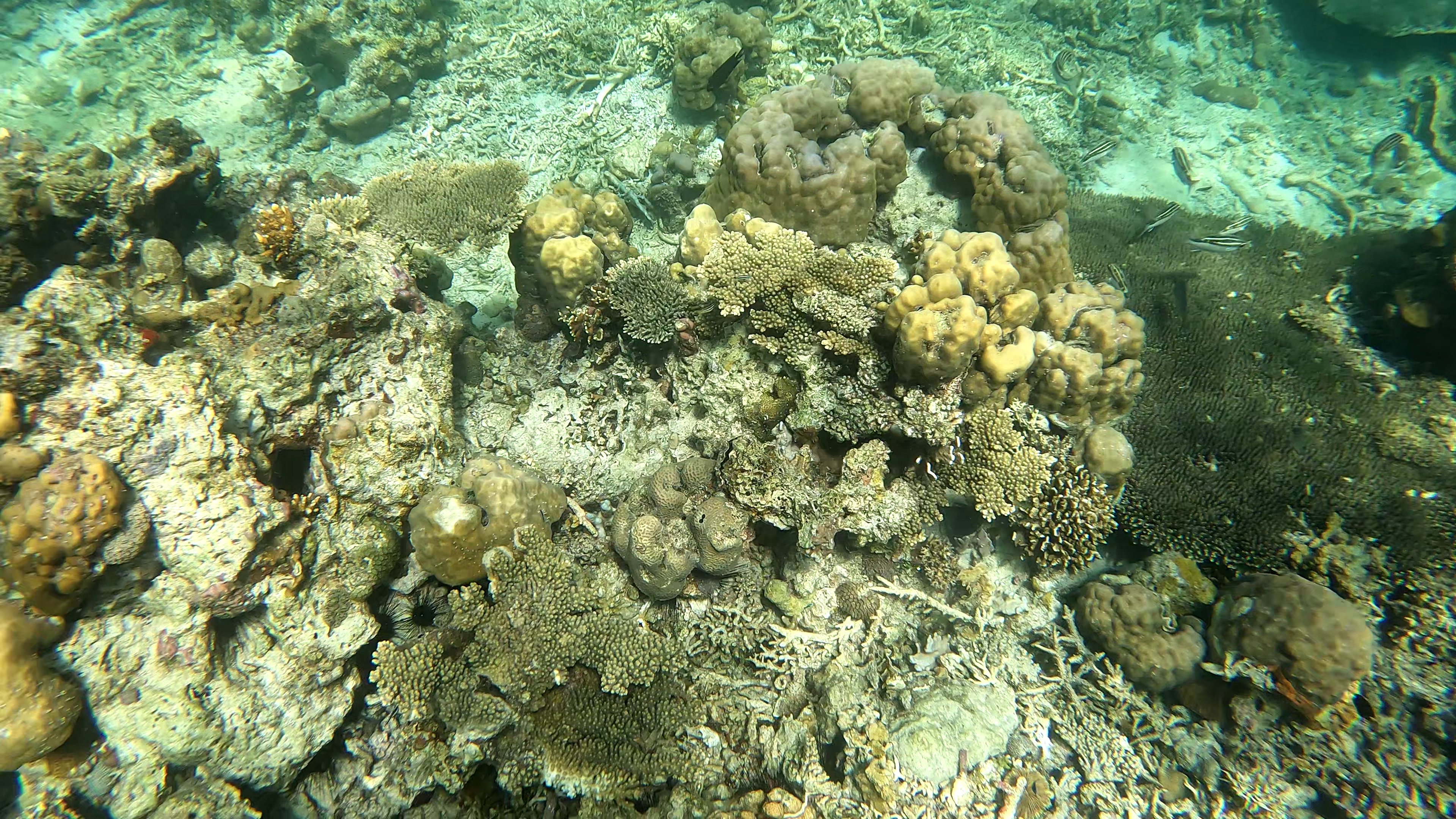
Getting there:
Bohol-Panglao International Airport is Bohol's air hub serving both domestic and even direct international flights (although only from South Korea as of this writing), so don’t be surprised to see many tourists from there. It replaced the original Tagbilaran Airport in 2018 to support Bohol's increasing number of visitors, and, unlike its predecessor, the new airport is situated on Panglao Island, the province's premier tourist destination and home to most of Bohol's 4- and 5-star resorts.
Although travelling by air is becoming an increasingly common way for tourists to reach Bohol these days, another popular (and scenic indeed) way of getting there is by ferry. In fact, the number of sea passengers arriving Bohol has historically been about six times higher than air passengers and despite the increased air traffic (due to the opening of the new airport), travelling by ferry still remains a common way to reach Bohol with the most common ferry route being the one from Cebu City – Philippines' second-largest metro area after Manila. Indeed, travelling by ferry between Bohol and Cebu City makes the most sense if one wishes to combine both destinations in one trip without having to return to Manila, especially considering that it only takes about two hours on a fast ferry to travel between Tagbilaran Port (in Bohol) and Cebu City.
Our resort:
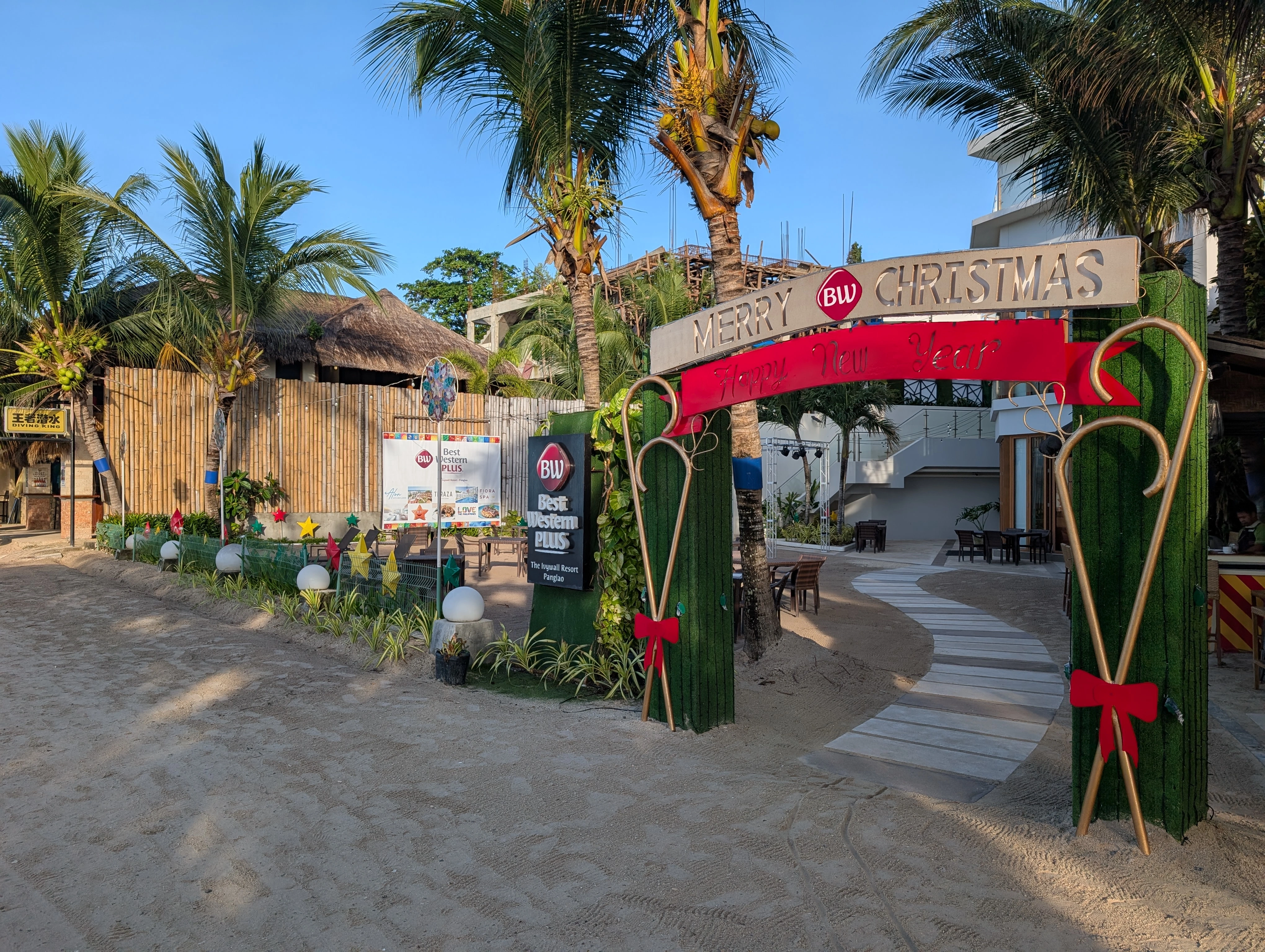
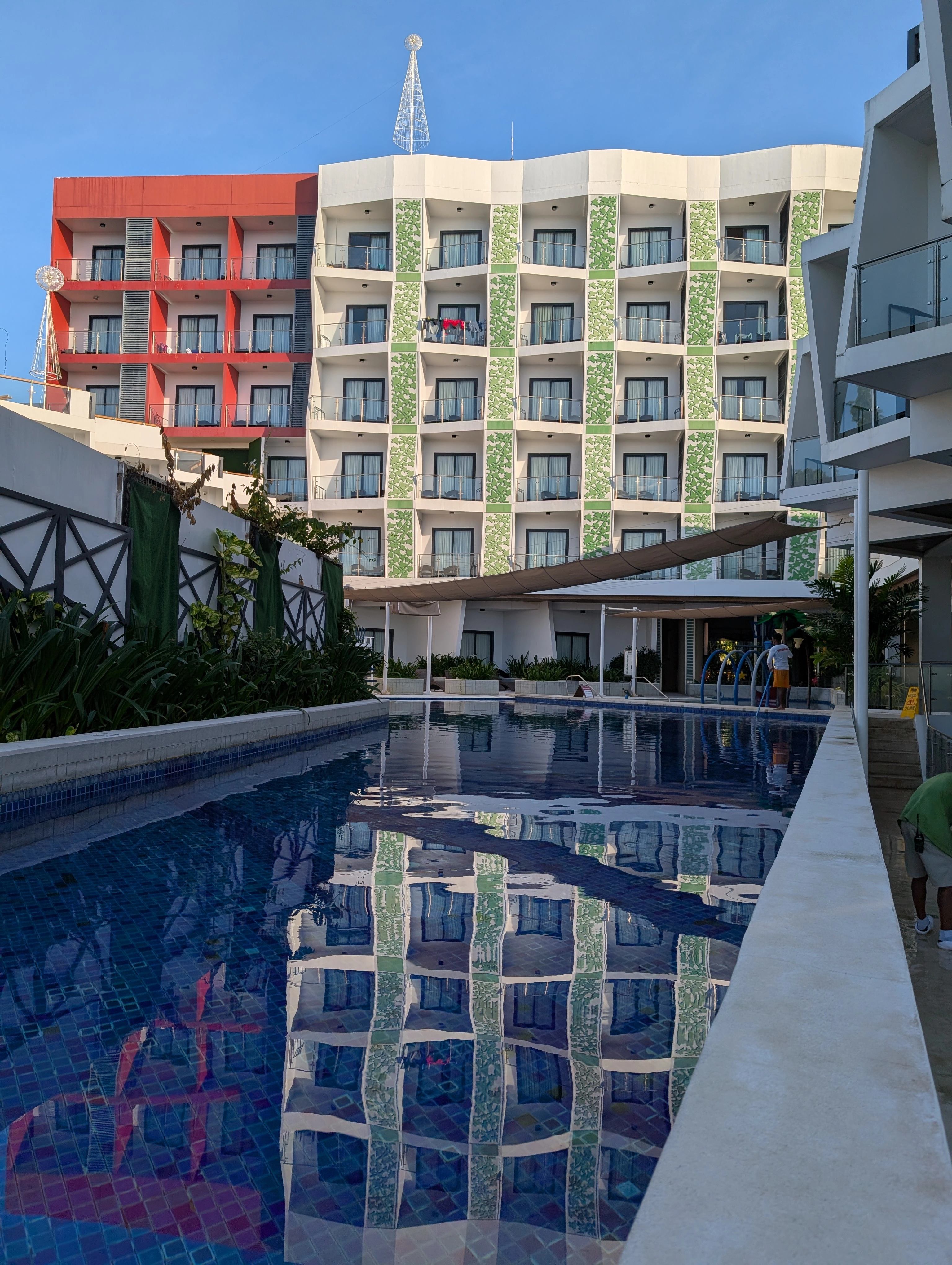
With its vibrant atmosphere, numerous restaurants, dive centers, gift shops, and, of course, its powdery white sand beaches - all within easy reach - Panglao Island was a natural choice for us to spend our 5-day, 4-night tropical getaway. There are lots of options when it comes to accommodation on Panglao Island, but Best Western Plus the Ivywall Resort-Panglao (the first international-chain resort in Bohol) was the one that caught our eye. Situated directly on Alona Beach, just 10 minutes from the airport and within walking distance of multiple restaurants, cafes, local shops, and convenience stores, this family-friendly resort offers extensive facilities, including two pools: a big outdoor lagoon pool with a swim-up bar and a separate kiddie pool with fun water features; a full-service spa; health club/gym; multiple dining options; a rooftop deck; and a children's playground. As a welcome bonus, a delicious buffet breakfast is included.
Places we visited:
During our stay in Bohol we visited some of its top attractions, including Chocolate Hills, Tarsier Sanctuary, picturesque Loboc River, Bilar Man-Made Forest, Sevilla Twin Hanging Bridge, and Baclayon Church. All these attractions could be leisurely visited in a single day and there are a few ways it can be accomplished. The most common ways to visit Bohol's top sights are through a private car/van rental with a driver, a guided tour (private or shared), or by renting a motorcycle/scooter for self-guided exploration. We decided to go for a private guided tour option not only due to its obvious advantage and convenience (of simply sitting back, relaxing, and enjoying the views), but also because all entrance fees were already included in our tour price. Moreover, since it was a private tour, we could choose not only our departure time, but even how long to stay at each attraction.
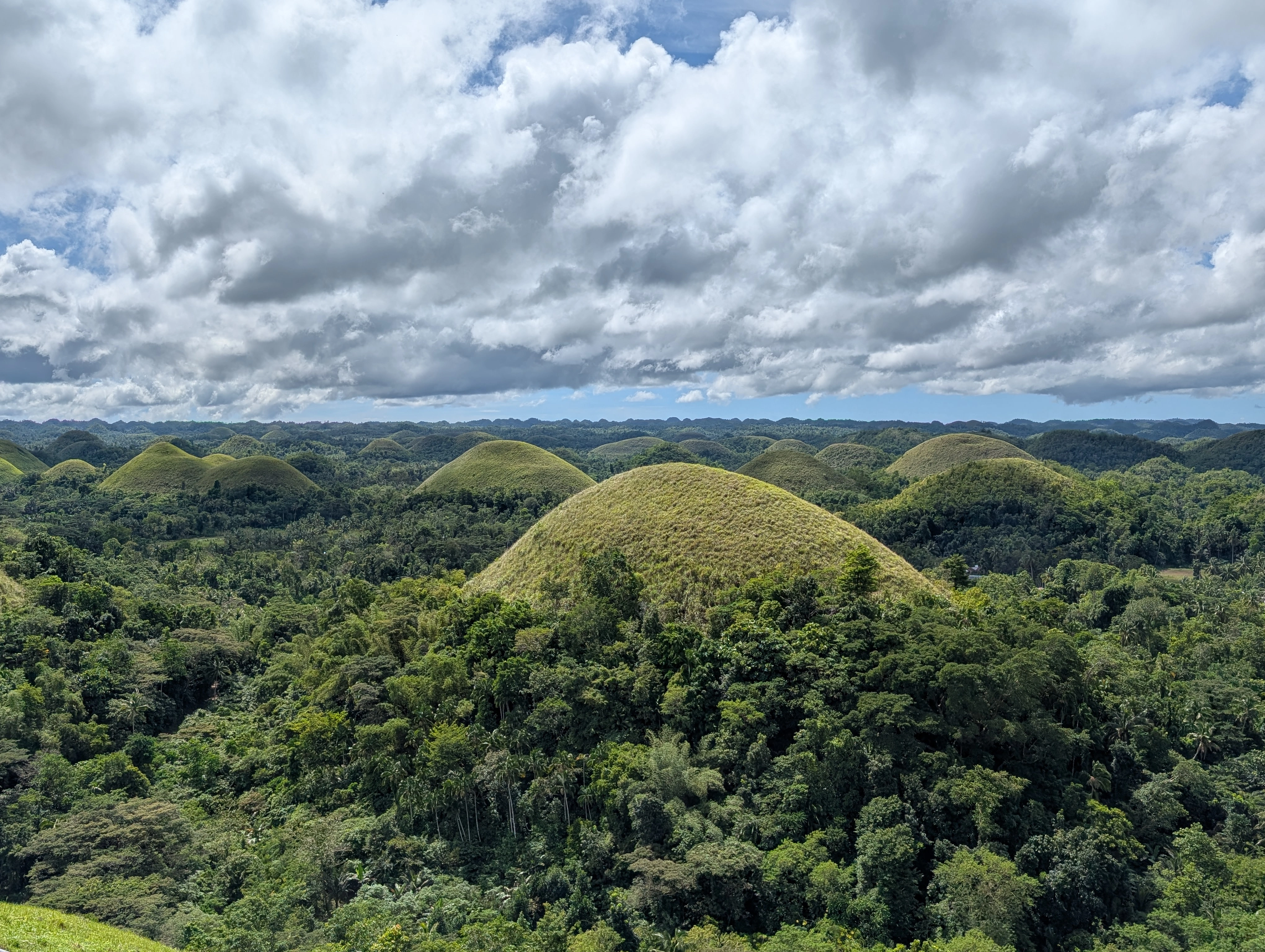
The Chocolate Hills Complex is the primary observation site for viewing iconic Chocolate Hills. It's located in the heart of Bohol Island, in the Municipality of Carmen. It was the first attraction we visited and the furthest point of our tour. In fact, if you decide to explore Bohol on your own, with Chocolate Hills being on your to-do list, I would highly suggest visiting it first purely due to transportation logistics as most of Bohol's other popular sights will be conveniently situated along your way back. The complex's observation deck is located atop one of the highest hills, so you will need to climb over 200 steps to reach it - not an easy feat, especially in 35°C (95°F) heat - but if you manage to get all the way to the top, your efforts will be rewarded with some of the most spectacular 360-degree panoramic views of countless hills as far as an eye can see – a sight you won't want to miss!
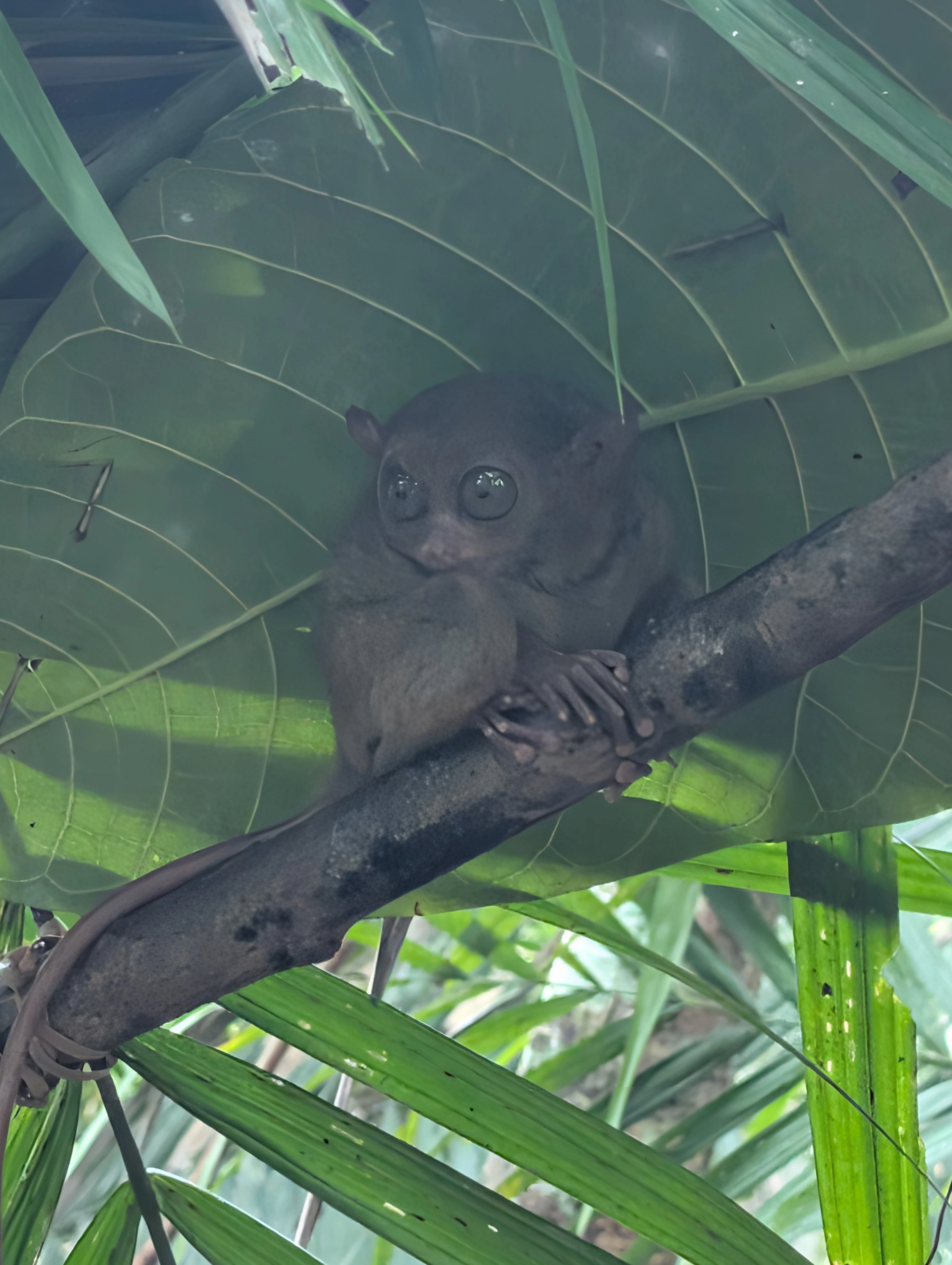
Our next stop was the Tarsier Sanctuary, home to tiny primates no larger than a human fist. Known for their enormous, fixed eyes that provide these nocturnal animals with excellent night vision, they are most active at night; during the day, you may find them clinging to branches or hiding under large leaves.
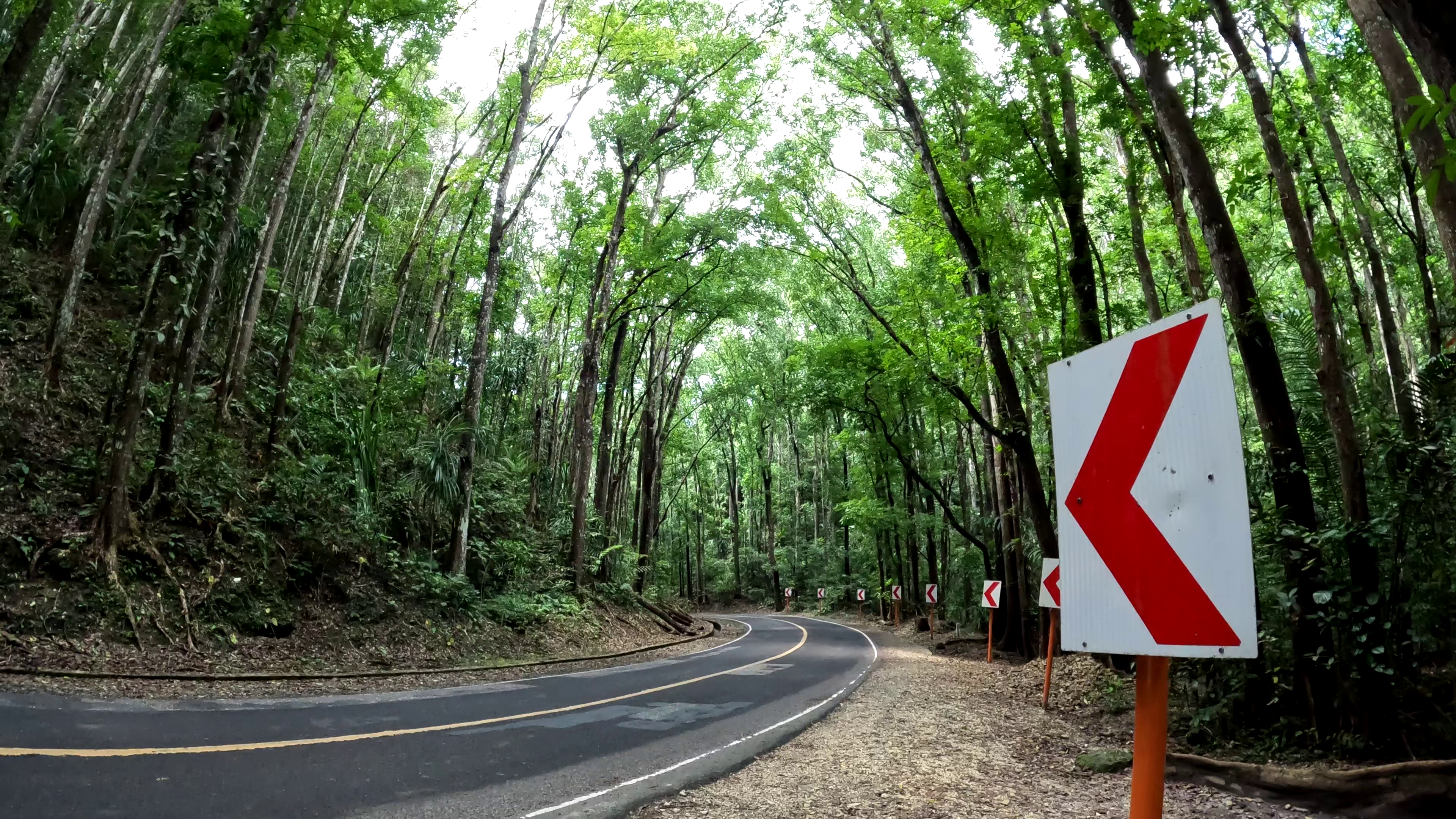
The Bilar Man-Made Forest is a stunning two-kilometer stretch of densely planted mahogany trees forming a towering natural tunnel over a highway. Tourists often make a quick stop here to take "jump shots" or portraits in the middle of the road (which is what we did too); before stepping onto the road, however, keep in mind that it's actually a functioning highway with fast-moving vehicles and blind curves, not something to take lightly in the Philippines!
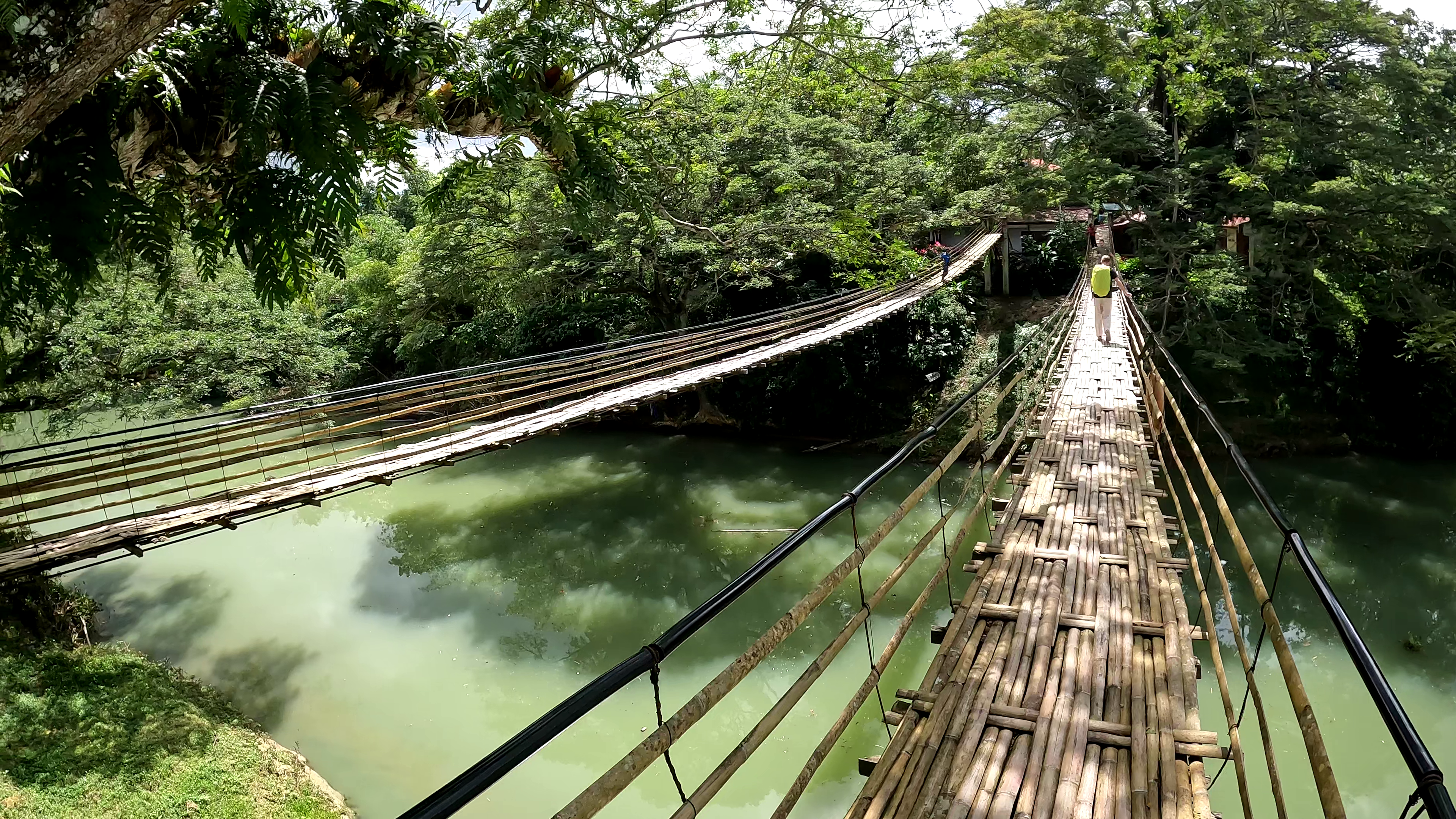
We then visited Sevilla Twin Hanging Bridge, a popular adventure stop known for its panoramic views of the Sipatan river below and the surrounding lush greenery. It consists of two parallel bridges (one for crossing over and the other one for returning) suspended some 20 meters above the water and spanning a length of 40 meters. Despite the fact the original rope suspension has been replaced with modern steel cables for safety, the bridge decks (made of woven bamboo slats) creak and sway as you walk, providing a thrilling (scary?) experience, so probably not for the faint of heart!
At that point we were hungry and our next attraction offering buffet lunch amidst scenic riverside views was well-timed indeed. Loboc River Cruise is approximately an hour-long journey aboard a large, rustic floating restaurant slowly gliding along emerald-green waters of Loboc River, where guests get to sample traditional Filipino dishes while passing through lush palm forests and enjoying live music aboard. At about halfway point, you'll have a stop (the location of which depends on your starting point) either at a floating platform (where local community members will perform traditional Filipino folk dances) or, as in our case, at a riverside village, where not only you'll get to watch members of the local Ati tribe, dressed in traditional attire, performing traditional music and dances to the beat of the drums, but will also have an opportunity to actually interact with tribe members, learn a little about their heritage, take photos with them, and even try activities like playing a drum or using a bow and arrow.
We finished off our adventure-filled day by visiting Butterfly Garden, Baclayon Church, and a souvenir shop, all at a leisure pace and although we were a bit tired by end of the day, we were by no means exhausted, so I would say that booking a private tour (or reserving a private car with a driver) for such a long day is the way to go unless you really enjoy riding a motorbike/scooter.
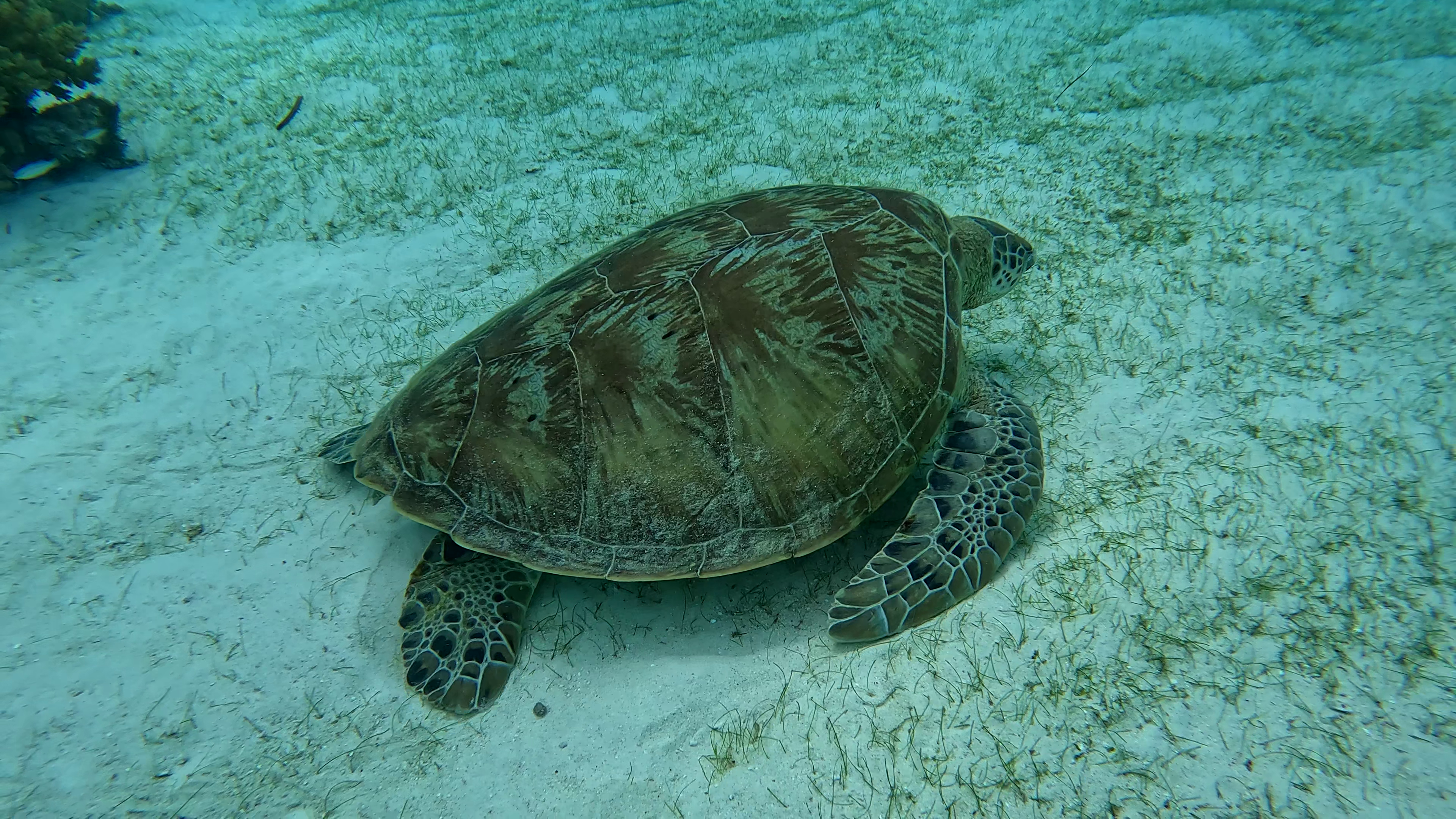
While in Bohol, we just couldn't miss out on yet another popular activity there: snorkeling (or diving, if this is your thing). Known for giant sea turtles, wide variety of tropical fish and colorful corals, Balicasag Island is a fantastic snorkeling spot easily accessible from the Panglao Island via island-hopping tours, which is what we decided to do as well. A trip to Balicasag Island starts with a 30- to 40-minute boat ride from the boat docking area on Alona Beach. In our case, the private boat was waiting for us just a short walk from our resort, which is another rather convenient feature if you stay at the Best Western Panglao. Upon arrival, we were transferred to a smaller, traditional wooden outrigger boat (called bangka), with our local guide, so we could reach our snorkeling spots. Typically, the two points visited are the "Fish Sanctuary" (to see the coral gardens and tropical fish), and the "Turtle Point" (where you'll have an opportunity to swim with giant sea turtles). We were lucky to be able to see one of them. It was a truly mesmerizing experience! After all that snorkeling, you may have your lunch right on the island (usually not included in the cost of your tour) before continuing to your next (and final) stop – Virgin Island, a long stretch of pristine, C-shaped white sandbar that emerges during low tide. The island’s picturesque, pristine landscape offers some stunning photo opportunities with crystal-clear, turquoise water all around.
Bohol island-hopping tours usually start very early in the morning (at around 6 am) not only due to calmer seas, but because it is also the optimal time for dolphin watching (on your way to Balicasag Island). With such an early departure, these tours typically end at around noon, so you'll still have ample time for other activities on that same day.
CORON
Overview:
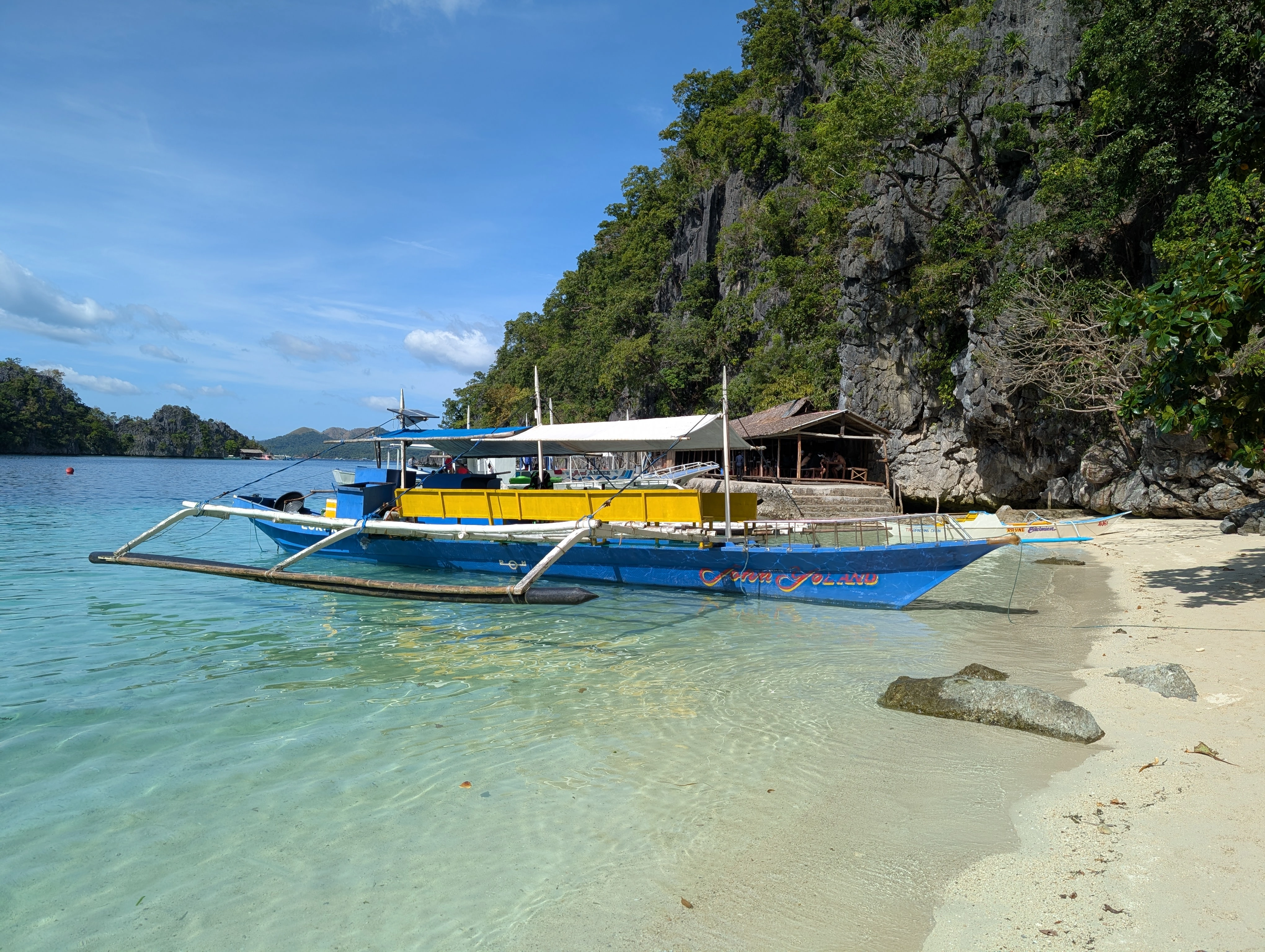
Located in Calamian Islands of the province of Palawan, Coron is famous for its dramatic limestone cliffs, crystal-clear freshwater lakes, and world-class wreck diving sites. Island hopping is the primary activity and the main draw for visitors to Coron as nearly all major attractions, such as lakes, lagoons, coral reefs, and shipwrecks, are only accessible by boat. There are many tour operators in Coron offering a variety of activities, including day tours (both island-hopping and land-based) as well as multi-day tour packages. For single-day island-hopping tours, you may either join a group (which is the most affordable option) or book a private tour (as we did). If you go on a private tour, some operators may even allow you to create your own itinerary by picking the spots you want to visit!
In addition to island-hopping (which is what attracts most visitors to Coron), there are also a few notable and rewarding land-based activities on the main island of Busuanga, where Coron Town (the commercial capital of Calamian Islands) is located. For example, hiking Mount Tapyas (which is the most famous and accessible peak in Coron, standing 210 meters above sea level) is a popular (albeit strenuous) activity you could partake in if you were so inclined. Conquering over 700 steps in midday heat is an accomplishment indeed. If you manage to reach the top, you will be rewarded with stunning, 360-degree panoramic views of the town and the surrounding islands. It is highly recommended to visit for the sunset, when the weather is cooler and the vistas are at their most spectacular. After conquering Mount Tapyas, heading over to Maquinit Hot Springs is a perfect way to unwind. Soaking in the mineral-rich, 40°C water, surrounded by a protected mangrove forest, is a truly unique and relaxing experience.
Getting there:
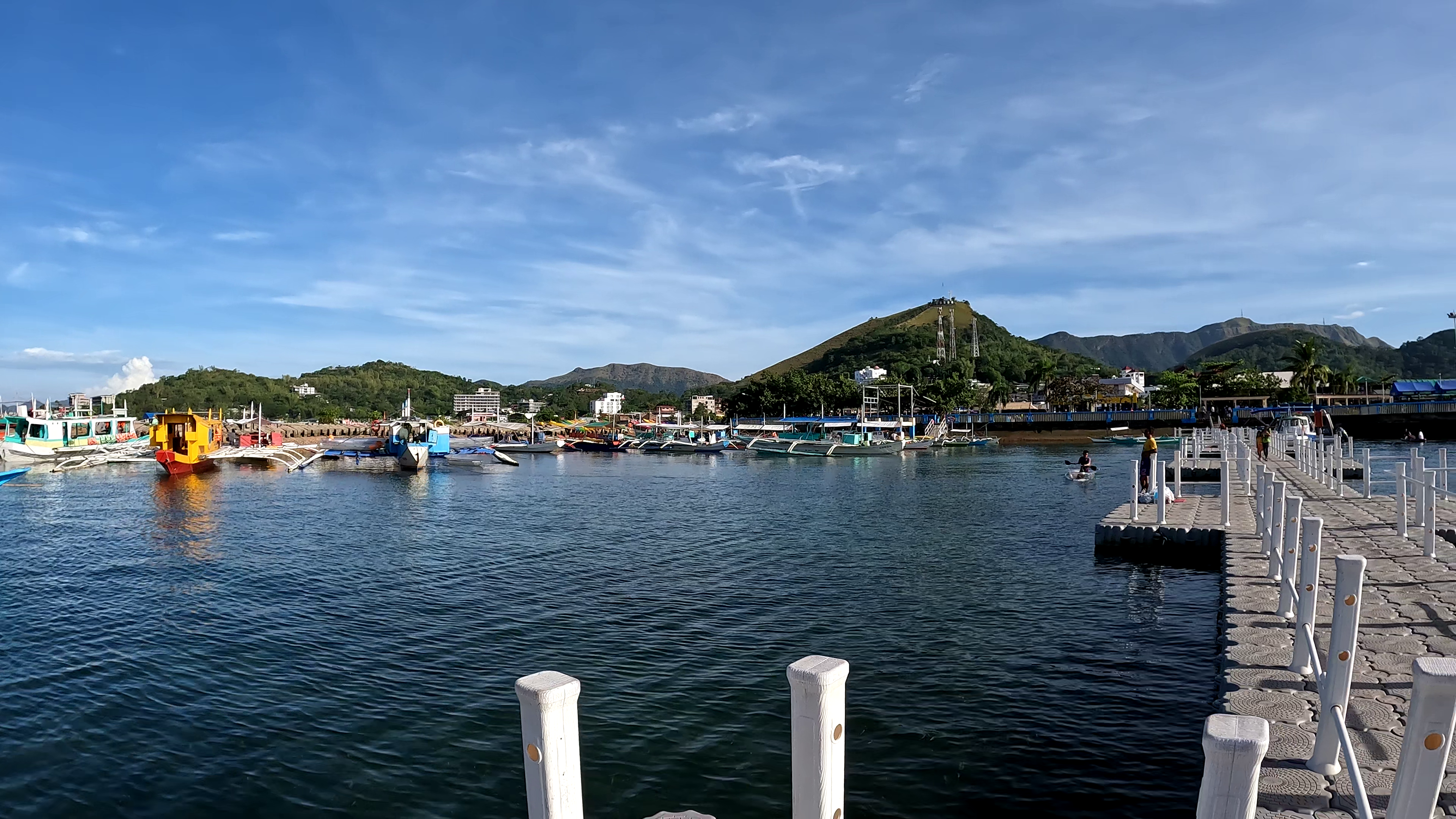
The most efficient way to reach Coron is by flying to Francisco B. Reyes Airport located on Busuanga Island, which is how we got there as well. In addition to flights from Manila, Coron also has direct air connections to Cebu, Angeles, and El Nido (as of this writing). However, much like traveling to Bohol, flying to Coron is not the sole method of reaching it. An alternative is traveling by ferry, which is a much slower and more adventurous, but often a more budget-conscious, way to travel. The Coron-El Nido route is particularly popular among tourists. On this route a fast ferry takes about 3.5 to 4 hours. If you do arrive in Coron by air, it should be noted that the airport is about 30-45 minute drive from the Coron Town proper and the most common and recommended transportation method to and from the airport is a pre-booked private van transfer, so I would highly suggest to have it arranged in advance directly through your accommodation to ensure stress-free arrival.
Our resort:
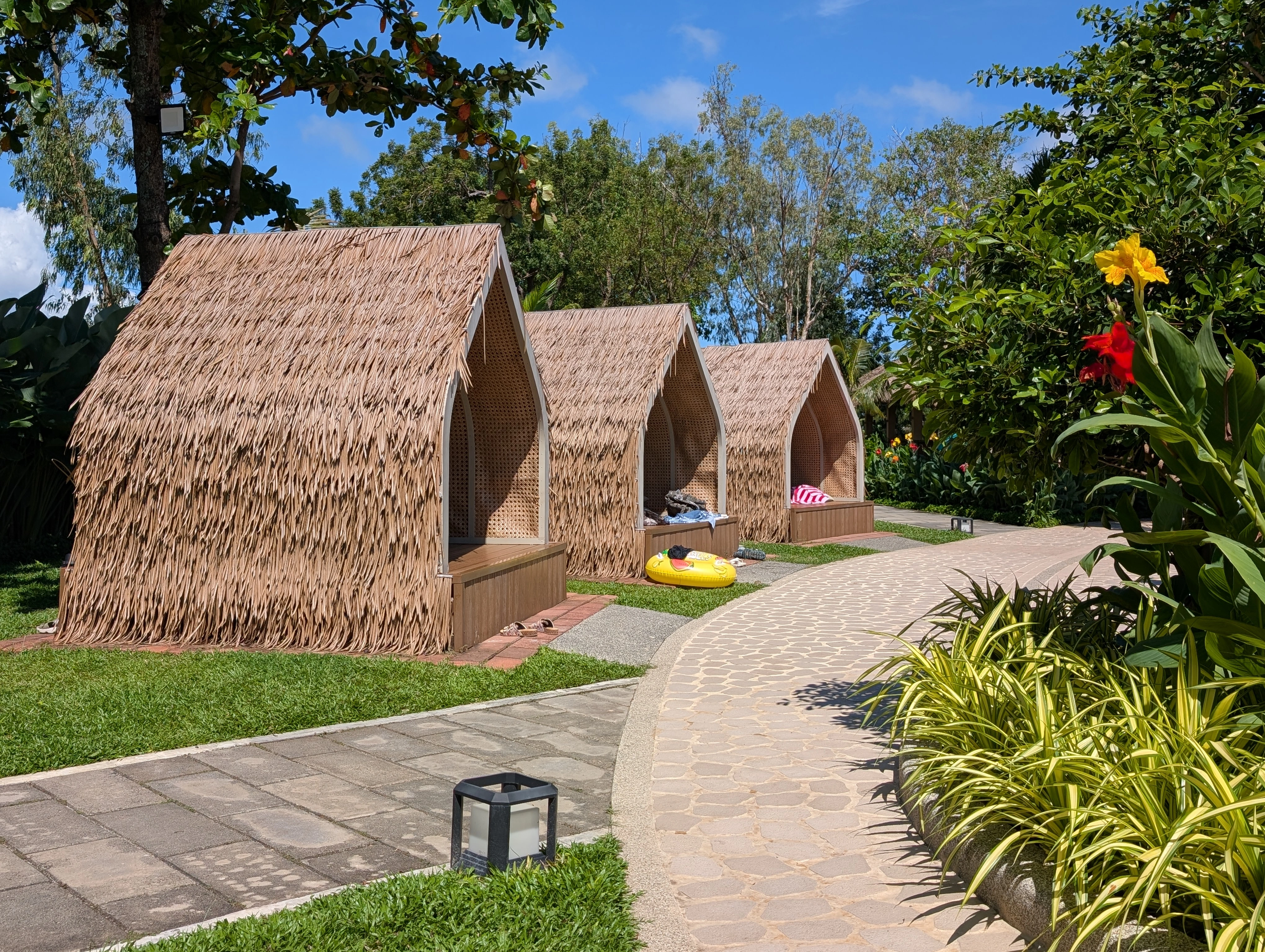
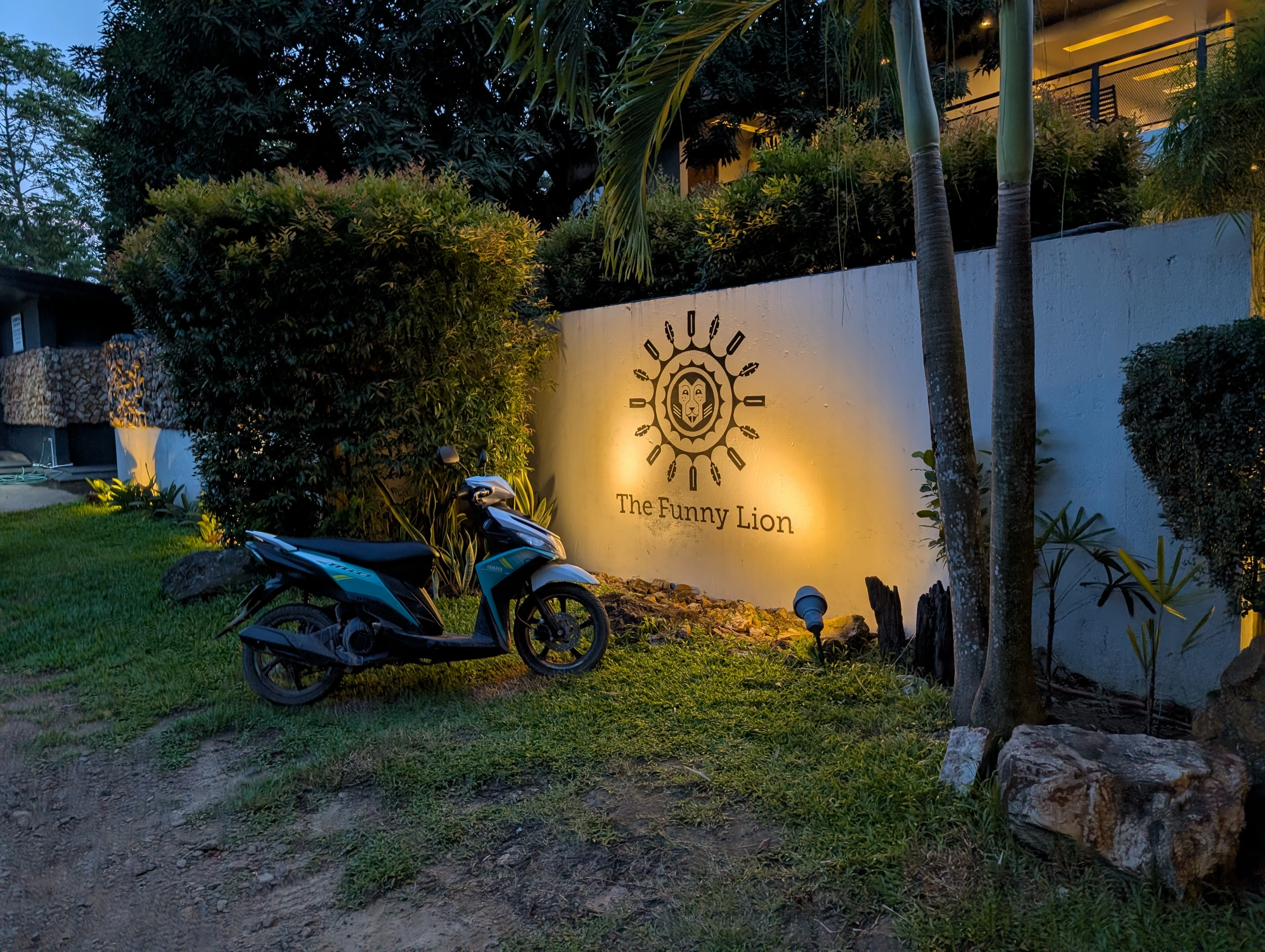
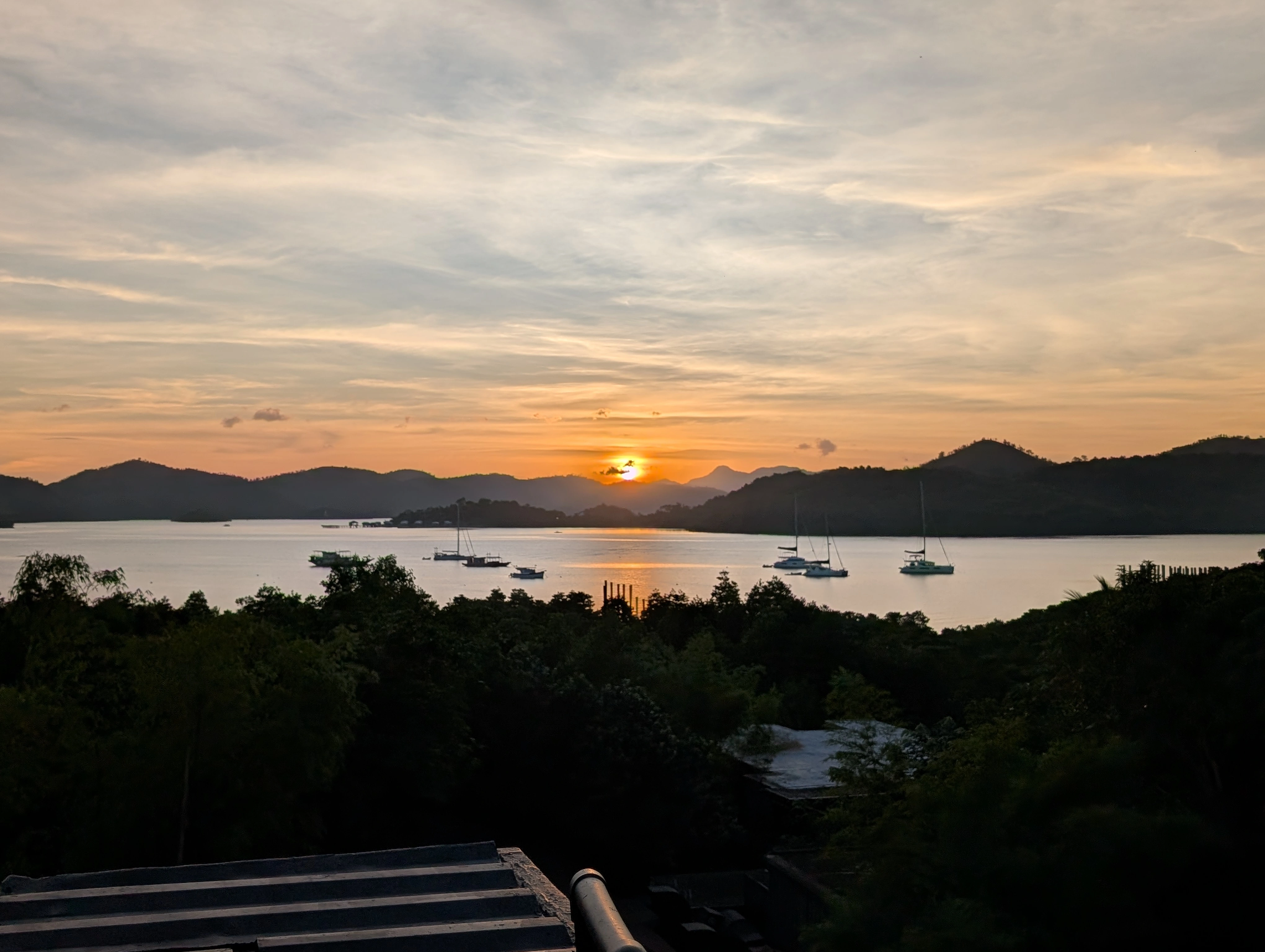
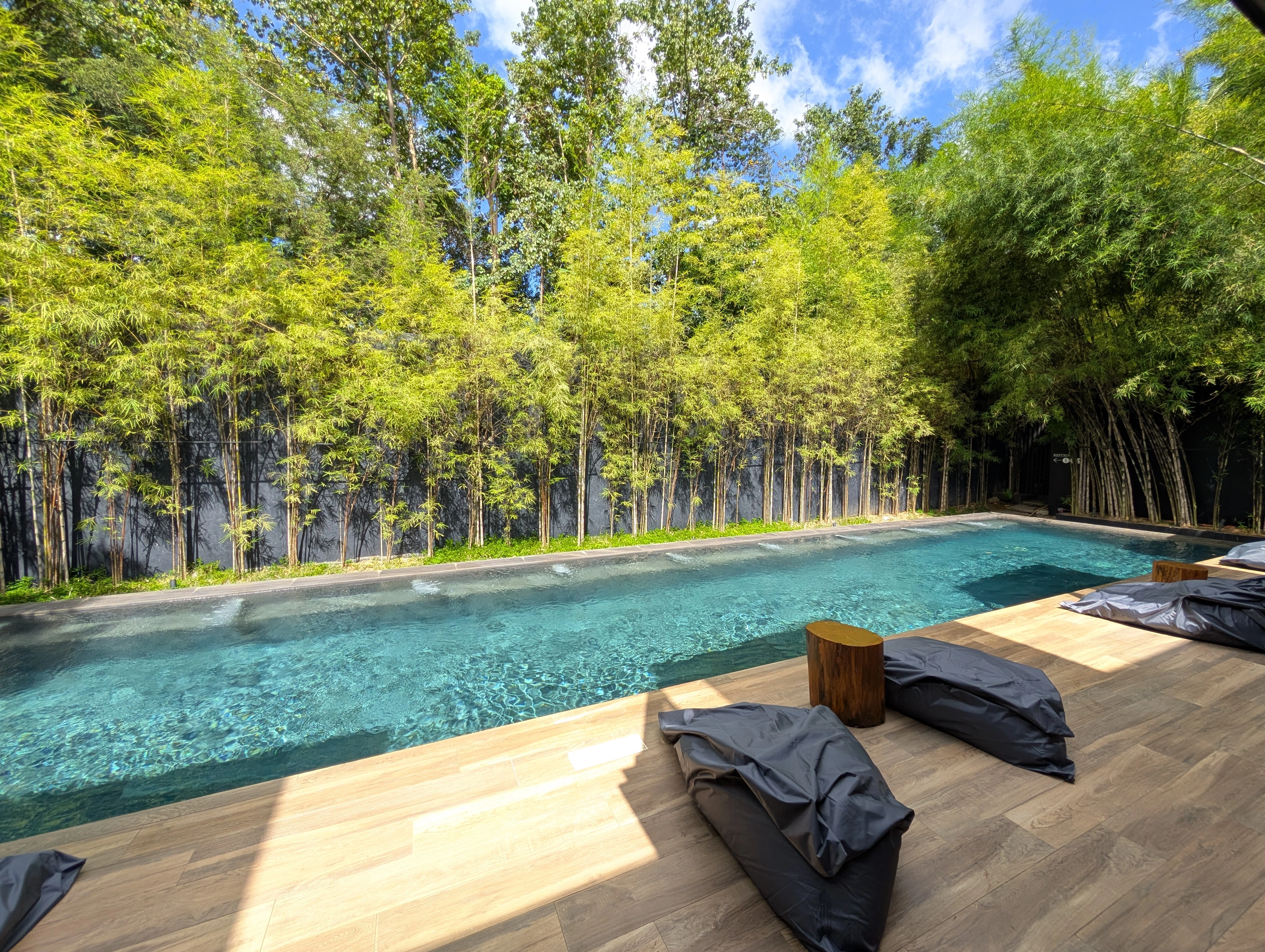
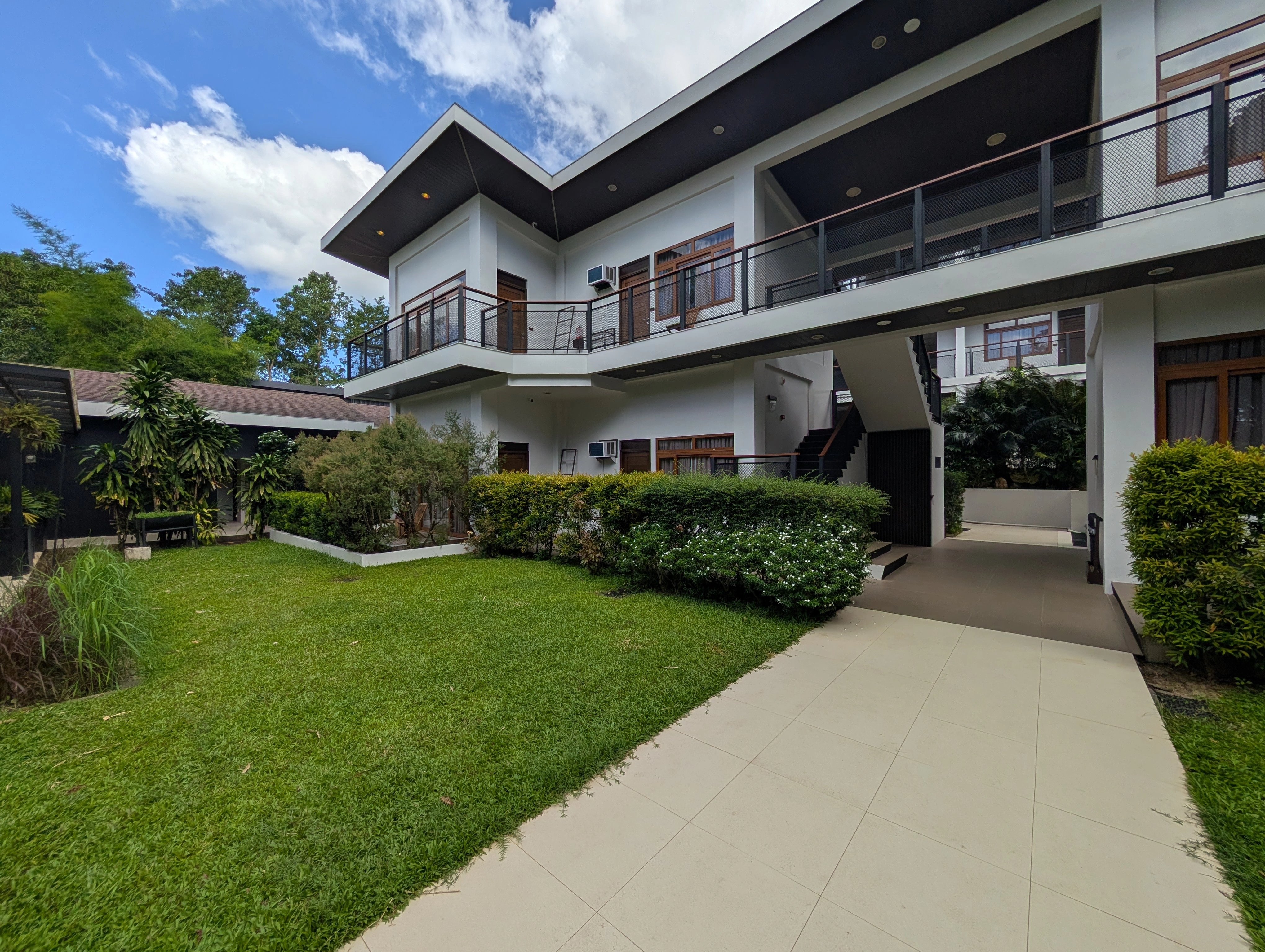
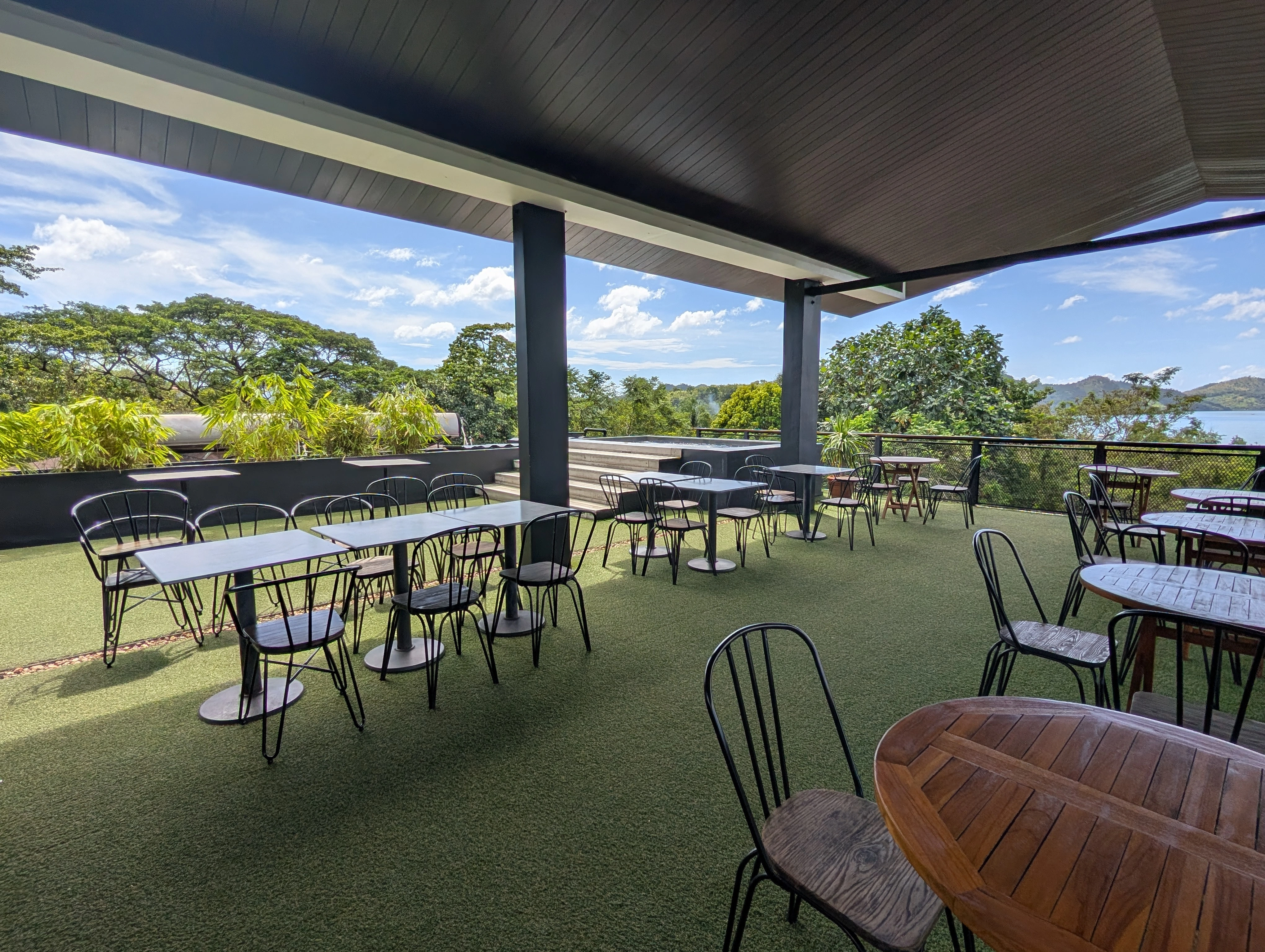
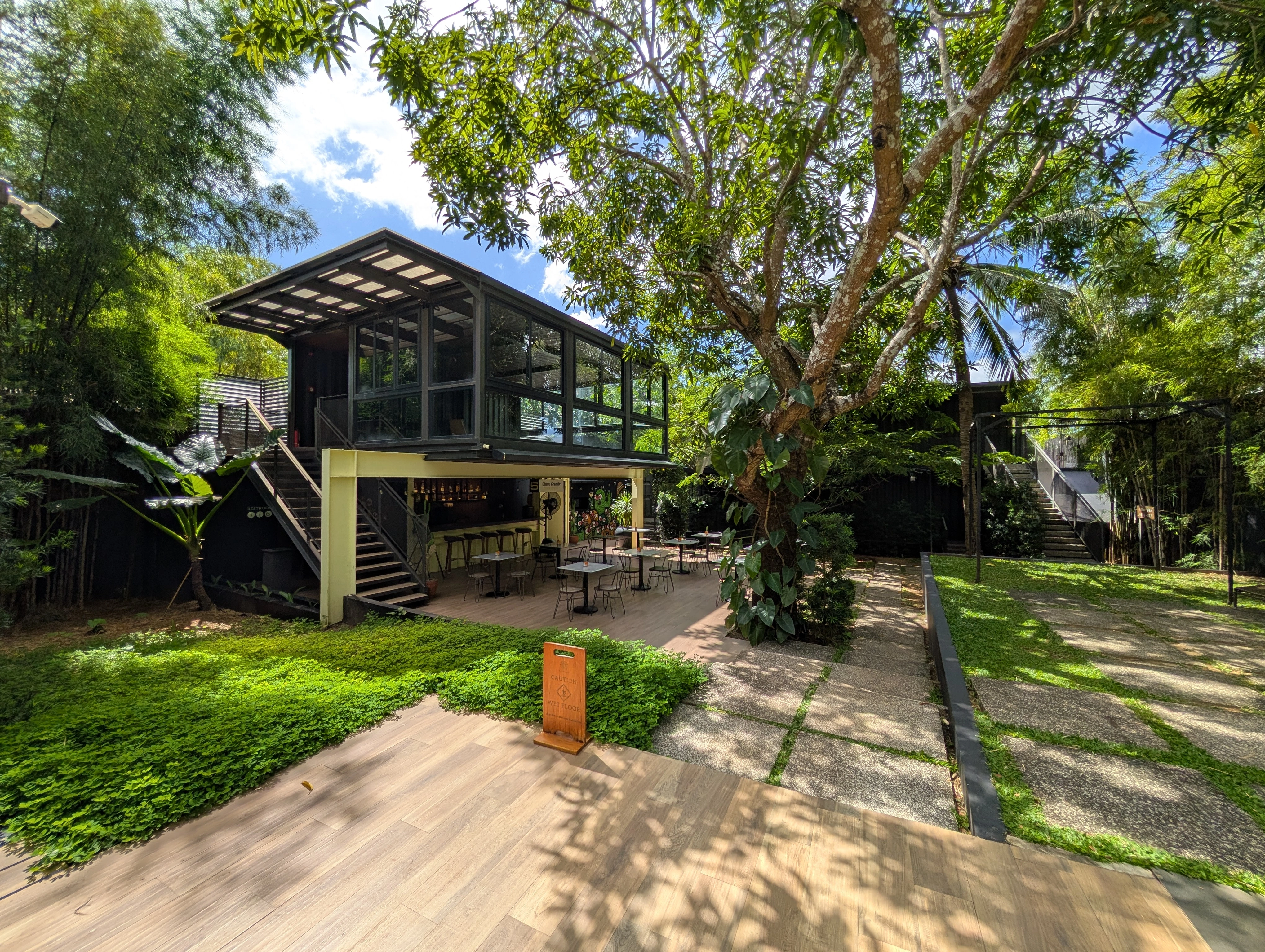
Known for its warm, personalized Filipino hospitality, excellent amenities, and numerous thoughtful little surprises (including complimentary daily snacks and welcome gifts), The Funny Lion Coron's consistent recognition as the #1 traveller-ranked hotel in Coron (and often the Philippines as a whole) on websites like TripAdvisor comes as no surprise, so the choice of accommodation for our 3-night Coron gateway was effectively decided well in advance of our arrival. Even before we arrived, communication with the hotel (through WhatsApp) was a breeze: we always received fast responses to our multiple inquiries, which was already a good sign. And from the moment the staff welcomed us and shared a tour of the hotel's grounds, we knew we had found something special. Between the cozy rooms and tranquil setting, the generous complimentary perks and a superb breakfast, the variety of dining options and amazing facilities (including the rooftop deck – a breathtaking sunset spot), every detail about this property impressed us. Above all, it was the exceptional, attentive service from all staff members that left a truly lasting mark on all of us. And the hotel's location is truly unbeatable: tucked away in a quiet cove on the outskirts of Coron Town, the hotel serves as a serene sanctuary while remaining remarkably accessible – just a 5-minute tricycle ride from the vibrant restaurants and bars of Coron's town center.
Places we visited (and the ones we missed):
Given that island hopping is the top activity in Coron, we knew we had to experience it for ourselves! As a family traveling with our 6-year-old son, we were looking for a well-rounded itinerary that would offer a mix of physical activities and opportunities for relaxation. "Coron Island Tour A" was just perfect for us: it kept us active with some light hiking and snorkeling but also gave us enough beach time to unwind. The tour highlights included swimming in Kayangan Lake and Hidden Lagoon, snorkeling through vibrant Coral Garden, and enjoying an included alfresco lunch on the beach.
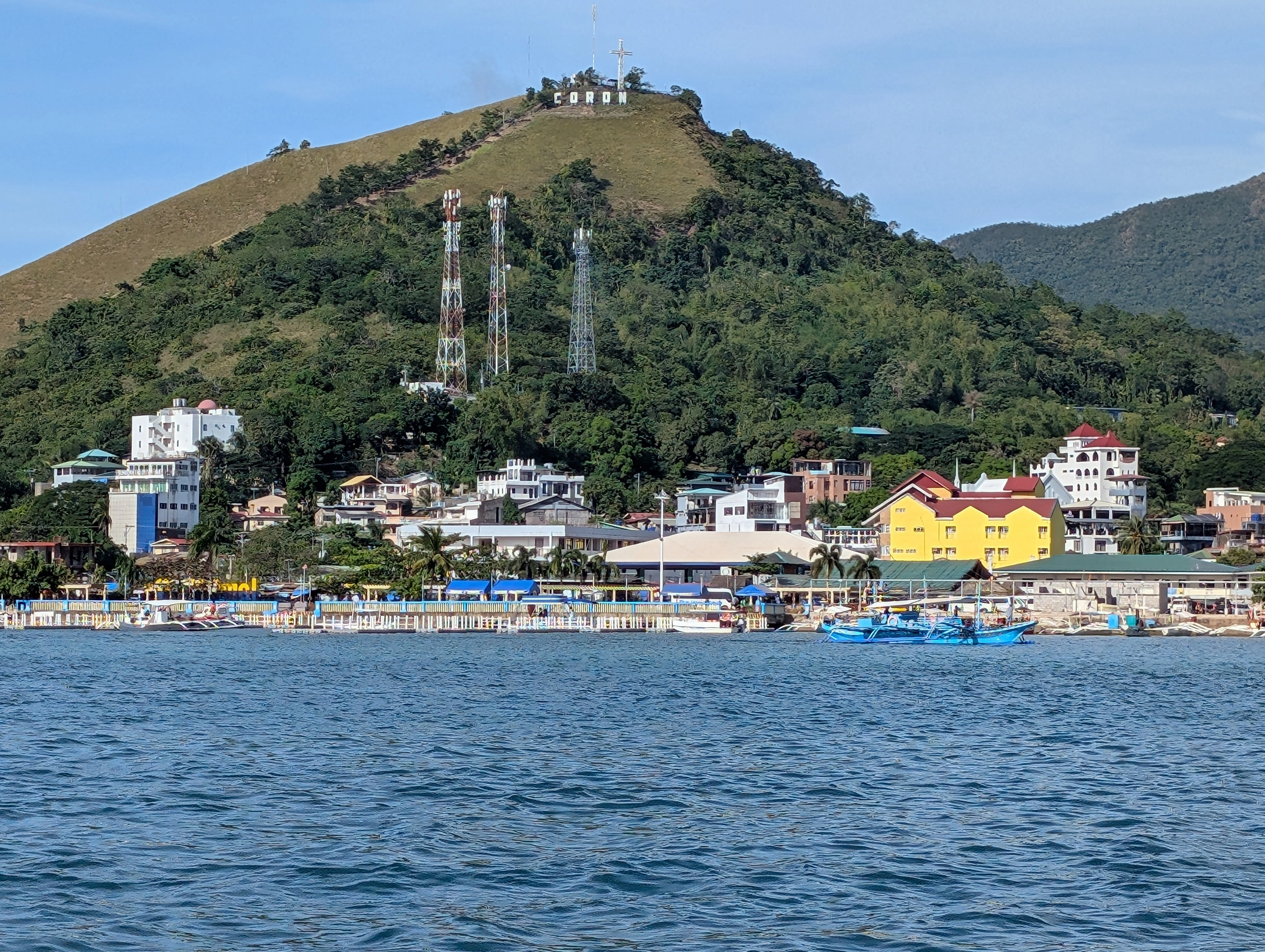
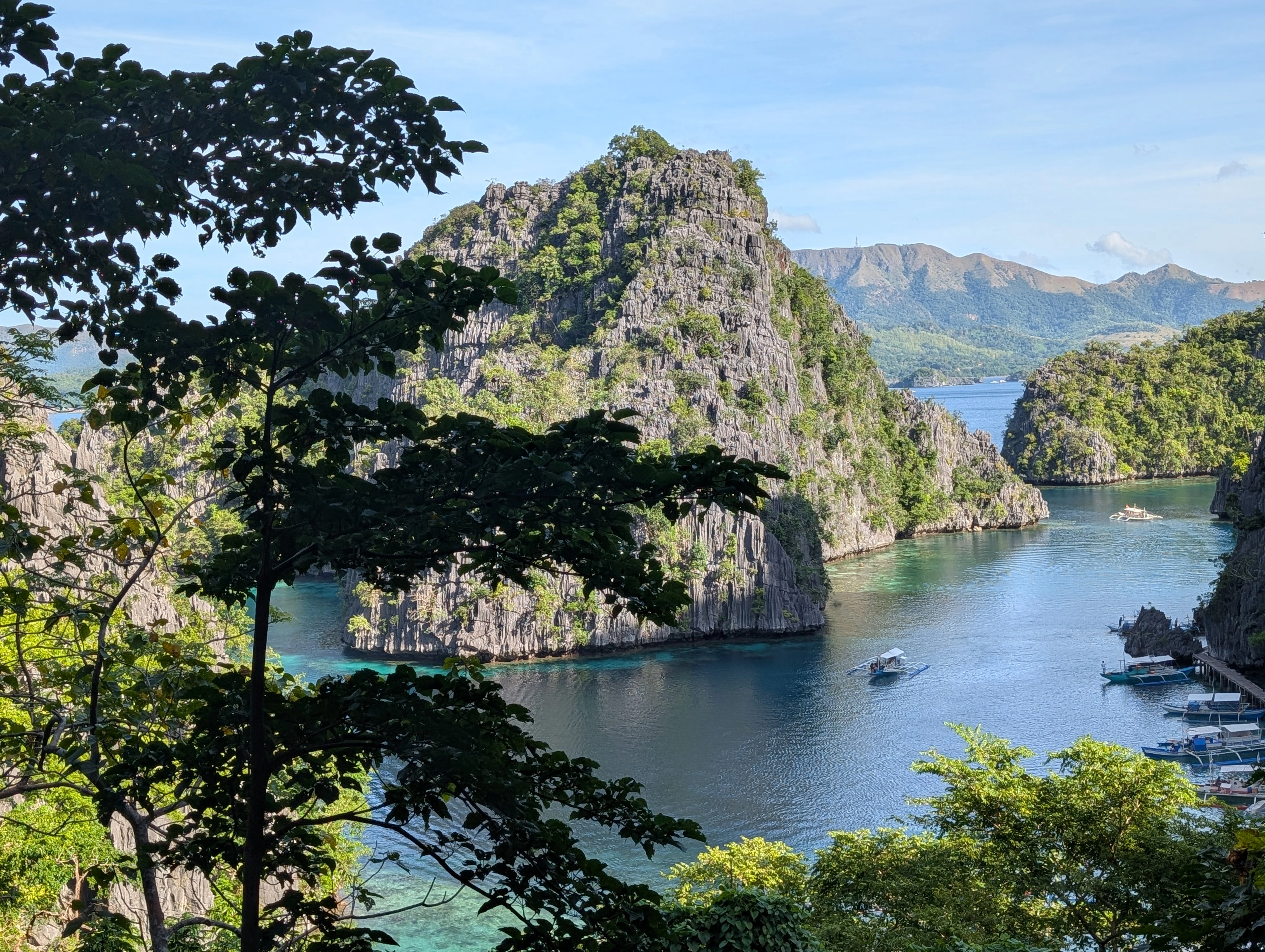
Kayangan Lake is considered the most popular tourist spot in Coron. Encircled by towering limestone cliffs, the lake is renowned for crystal-clear waters that offer visibility up to ten meters deep, exposing massive underwater rock formations. It's also often hailed as the cleanest and clearest lake in the Philippines. And I would even say that if there was only one destination you could visit while in Coron, it should be Kayangan Lake but be aware that reaching the lake requires climbing 367 steps in total (163 up and 204 down) over a mountain pass. At the peak of the climb, before descending to the lake, you will find a panoramic viewpoint known as the "Postcard View". This is one of Coron's most photographed spots, although the iconic image taken here actually overlooks the boat docking area of Coron Bay, not the lake itself.
Although we missed them, other popular island-hopping spots in Coron include some truly unique natural wonders. Twin Lagoon, for example, features two connected lagoons: a narrow opening in the rock allows passage at low tide, while a wooden ladder is used when the tide is high, while Barracuda Lake, nestled within a volcanic crater, is most famous for its sudden temperature shifts and impressive underwater karst formations. For snorkelers and freedivers, Siete Pecados Marine Park is a top spot, offering abundant wildlife and vibrant corals. Finally, there's Malcapuya Island, often called "Mini Boracay" due to its long stretch of powdery white-sand beach and pristine, crystal-clear turquoise waters, perfect for beach photography, swimming and relaxing.
CEBU
Overview:
The island province of Cebu, encompassing its main island and 167 smaller surrounding islands and islets, is renowned for its diverse mix of natural adventure, rich historical sites, and unique cuisine. Its capital, Cebu City, dubbed the "Queen City of the South", is the Philippines' oldest city, serving as a vital business and tourism hub. The city maintains a deep connection to its 16th-century Spanish colonial roots through historically and religiously significant landmarks including Magellan's Cross (that signifies the birth of Christianity in the Philippines), the Basilica Minore del Santo Niño (the country's oldest Catholic church), and Fort San Pedro (the oldest and smallest triangular bastion fort in the country).
The province of Cebu is a world-renowned hub for natural adventure, celebrated for its diverse land and water activities, which range from mountain trekking to deep-sea diving. Arguably the region's most famous adventure is canyoneering at Kawasan Falls, a high-adrenaline activity that combines trekking, climbing, scrambling, swimming, and cliff jumping. For diving and snorkeling enthusiasts, Moalboal Sardine Run (a unique experience of swimming among millions of sardines moving in unison just meters from the shore) and Whale Shark Encounters in Oslob (an unforgettable opportunity to see these massive creatures up close) are a must.
Finally, Cebu is internationally recognized for its distinct culinary identity, most famously known as the home of "the best pig ever". Cebu Lechon, a whole roasted pig, is legendary for its shatteringly crispy skin and succulent, herb-infused meat. It's a must-try for any visitor to the province.
Getting there:
Being a major transportation hub in the Philippines, Cebu is incredibly easy to get to. The Mactan-Cebu International Airport, the second busiest airport in the country, serves multiple domestic routes as well as direct international flights from major Asian hubs and beyond. The city also boasts a large, multi-terminal port that connects various regions through fast crafts and long-haul ferries. The route between Cebu City and Tagbilaran (Bohol) stands out as one of the busiest and most frequent routes, offering numerous daily fast craft and RORO (Roll-on/Roll-off) ferry services. Surprisingly, despite Cebu Island's massive size, the Mactan-Cebu International Airport is actually located on the much smaller Mactan Island in Lapu-Lapu City, just off the coast of Cebu City, with only three major bridges connecting Mactan Island to the mainland Cebu – a crucial factor to consider (along with the notorious traffic congestion) when it comes to making your transportation arrangements to and from the airport, especially if your hotel in located in the central part of Cebu City.
Our hotel and stay:
The hotel that we stayed at, Belmont Hotel Mactan, now operating as Mercure Mactan Cebu, is a part of the Mactan Newtown, a 30-hectare master-planned mixed-use "live-work-play-learn" township (still under development), featuring its own beachfront, located in Lapu-Lapu City on Mactan Island, just a 20-minute drive from the airport. Since the hotel has been re-branded, I won't go into the details of the property itself other than to say we had a great stay, but I want mention that the location is unbeatable: it offers easy, walkable access to township's private beachfront, restaurants, cafes, shops, and stores. In fact, the entire township is designed for pedestrians in mind, with all its components (that also include residential towers, offices, and the convention center) are just a short stroll from one another.
Since we stayed in Cebu only for two nights, we spent pretty much the entire day at the township's very own Mactan Newtown Beach (which the hotel guests have exclusive access to). The beach is just a short 5- to 7-minute walk from the hotel, but a complimentary beach shuttle is also available. The facilities include a large outdoor infinity pool, beach cabanas, sun loungers, hammocks (all available on a first-come, first-served basis), the Glass Pavilion (a modern, air-conditioned event venue featuring floor-to-ceiling glass walls and panoramic ocean views, used for weddings and special events), and the Seaview Lounge (an open-air venue that provides ocean views and can be used for a variety of events). The beach itself features a stretch of powdery white sand and calm, shallow waters, making it family friendly.
TOKYO
Overview:
This was my second and my family's first visit to this fascinating country and even though this time it was just a short 3-day 2-night stay, we still managed to visit several places and had a really good time. There's been many noticeable changes since my last visit to Japan about 10 years ago. Possibly the biggest change is in the number of foreign tourists. Japan's inbound tourism has experienced a historic boom over the past decade. Visitor numbers for 2025 are over double what they were back in 2015. The second noticeable change is in the number of cashless transactions. Japan has historically been a largely cash-based society. Starting in 2019, however, there's been a major shift towards contactless payment methods, significantly accelerated by the pandemic, with cashless payments now accounting more than 40% of all consumer transactions. Despite these changes, cash still remains essential for many small businesses, shrines, and rural shops. The third significant change is related to indoor smoking, which was largely unregulated until 2020, when a revised national law effectively banned smoking in all public indoor spaces, including hotel shared areas, restaurants, and retail outlets. The ban, however, doesn't apply to private hotel guest rooms designated specifically for smoking, and, apparently, there are some exceptions to smaller restaurants and pubs (like izakaya) that meet specific criteria. And yes, there are still many hotels in Japan that do have smoking rooms, particularly larger hotel chains and older business hotels, something to keep in mind when you book a room in Japan. One of our hotels we stayed at did have smoking rooms, which made us uneasy (as we are all non-smokers). Thankfully, our worries were misplaced, and our stay was perfectly fine. Even primarily smoke-free hotels in Japan often have designated areas to accommodate guests who smoke.
Tokyo Disneyland:
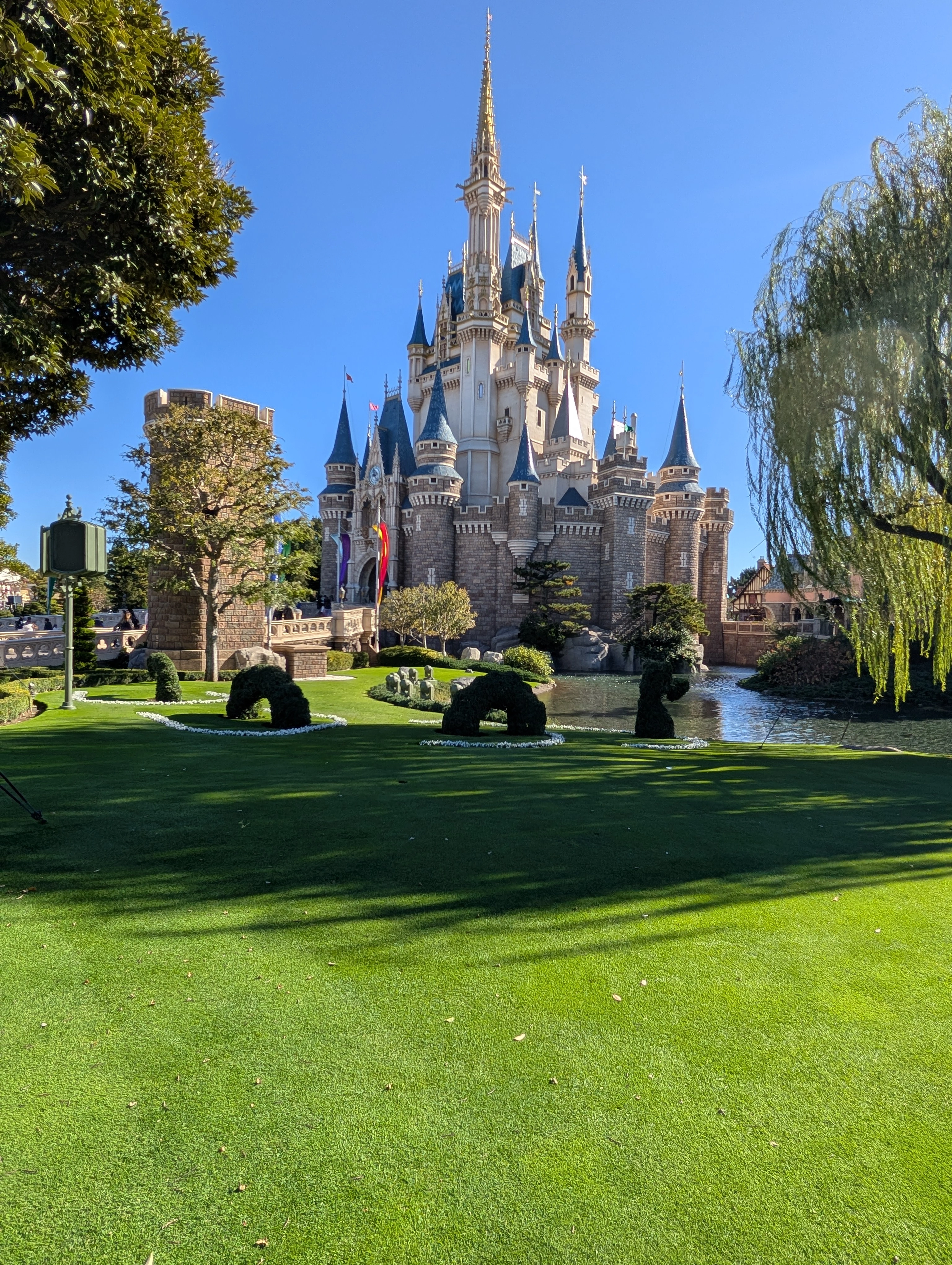
With only a few full days at our disposal, we decided to spend one of them at Tokyo Disneyland. Opened in 1983 and located in the city of Urayasu, just outside Tokyo, this was the first Disney park outside the United States. Tokyo Disneyland is a part of Tokyo Disney Resort that also includes Tokyo DisneySea, six Disney Hotels, and Ikspiari, a massive shopping, dining, and entertainment complex – the Japanese equivalent of Disney Springs at Walt Disney World in Florida or Downtown Disney at Disneyland California. One unique feature of Tokyo Disneyland (and its companion park, Tokyo DisneySea), is that they are the only Disney parks in the world not owned or operated by the Walt Disney Company. Instead, Oriental Land Company (OLC) both owns and operates the parks through a licensing agreement with Disney. OLC is known to often allocate generous budgets for construction and maintenance that result in highly detailed and innovative attractions, including Enchanted Tale of Beauty and the Beast (a highly popular and technologically advanced trackless dark ride taking guests through the classic film's story inside the Beast's castle) or Pooh's Hunny Hunt (one of the best trackless dark rides ever built due to its innovative technology and immersive storytelling). Both these attractions are exclusive to Tokyo Disneyland, as are Monsters, Inc. Ride & Go Seek! and The Happy Ride with Baymax – both of which are incredibly popular too, particularly the Baymax ride.
While technically not required, Tokyo Disney Resort App is crucial for a functional and efficient experience within the park. Not only it stores your tickets digitally and provides a detailed, interactive map with real-time ride wait times, show schedules, and parade times, without it, you won't have access to the park's core reservation systems – Disney Premier Access (DPA) and Tokyo Disney Resort 40th Anniversary Priority Pass – while many restaurants and cafes rely on Mobile Order allowing guests to place their orders from the menus at any time and from anywhere in the park without having to physically wait in line. DPA is a paid service allowing guests to select designated times for admission to the park's most popular attractions, parades and shows, significantly reducing wait times, typically costing ¥1,500 to ¥2,500 p/guest p/access. Tokyo Disney Resort 40th Anniversary Priority Pass functions similar to Disneyland's original free virtual queuing system (FastPass), allowing guests to reserve a one-hour return window for select attractions free of charge. And Entry Request is essentially a free lottery system used to grant access to select popular parades, shows, and character greetings.
This is very different from the systems currently used in the US Disney parks. Most notably, the US Disney parks no longer have the free virtual queuing system, which was replaced with a paid service currently called “Lightning Lane”, allowing guests to bypass regular standby lines for select attractions. In my opinion, I find the US Lightning Lane system to be a better one compared to that of Tokyo Disneyland. For example, at Tokyo Disneyland you can't purchase anything until you enter the park (except for your entry tickets) and there are currently only 3 attractions you could purchase DPA for, while Priority Passes cover only 5 attractions. And with well over 30 available attractions, the competition for both types of passes is intense. For perspective, on the day of our visit (which wasn't either a holiday or a weekend), all Priority Passes were pretty much gone by 11:30 am (with the park's operating hours being from 9 am to 9 pm) and we were able to take advantage of this free service only once, so we had no other choice but to line up at standby lines for most of the attractions with the average wait times even for some lower demand ones being around 15 to 20 minutes. Yes, for Tokyo Disneyland, that's considered a short wait!
By contrast, in the US Disney parks you may purchase "Lightning Lane Multi Pass" in advance and at Walt Disney World, for example, you may choose the first 3 attractions and arrival windows even before you enter the park. Moreover, the number of attractions with the line-skipping services is significantly higher in the US Disney parks and the passes for those don't go nearly as fast as they do at Tokyo Disney Resort.
In terms of layout, Tokyo Disneyland is designed around Cinderella Castle in a "hub-and-spoke" format and features wide open spaces, allowing for easier navigation among massive crowds, and the park's relatively compact size (about 115 acres) makes it manageable to explore on foot, but you can expect to do some (or a lot of!) backtracking. As for us, we made it to 10 attractions and a spectacular night show. While this may not sound like a huge number, for Tokyo Disneyland – especially when you're travelling with a young child – I'd say we did pretty well! Overall, we had a wonderful time at Tokyo Disneyland. I just wish there were more attractions that you could purchase access to (to avoid those massive standby lines) and longer availability of Priority Passes (the fact they were all gone by 11:30 am on non-peak day was a bit of a disappointment). But if you're OK with all these, a visit to Tokyo Disneyland is well worth it, especially if you have more than one day at your disposal and are staying at one of the Disney Hotels, where the single most valuable perk you’ll get (as a hotel guest) is the ability to enter the park 15 minutes before others with the "Happy Entry".

Tips and tricks to make your stay in Japan a better one:
If you are in Japan for less than a month, I’d recommend buying a Welcome Suica card, a prepaid, contactless smart card (IC card) designed for short-term visitors to Japan. It requires no deposit and can be used anywhere you see an "IC" logo:
Public Transportation: valid on almost all local lines, Tokyo Metro, and private railways in major cities; valid on most city buses and taxis (displaying the IC logo) and Tokyo Monorail.
Retail & Services: major convenience store chains like 7-Eleven, Lawson, and FamilyMart, all accept this card as are most drink and food vending machines.
Did you know that you could eat full varied meals from Japanese convenience stores (known locally as konbini)? These stores are known for high-quality, fresh, and affordable meal options that go far beyond typical convenience store fare in other countries. From ready-to-eat meals and hot foods to indulgent desserts and drinks, you’ll find it all – and with tens of thousands of locations across the country (for perspective, there are over 21,000 7-Eleven stores alone), finding a konbini is effortless.
Did you know that one of the most convenient and affordable options of travelling between Narita Airport and Tokyo City center is by Airport Bus "TYO-NRT", especially if you have lots of luggage? At just ¥1,500 (about CAD 14) for a one-way trip to Tokyo Station or Ginza, it’s generally the cheapest hassle-free direct service that runs frequently during the day.
Japan's best weather occurs in May, October, and November, which are ideal times for sightseeing due to mild temperatures, low humidity, and clear skies.
Be aware that hotel room sizes in Japan are often much smaller compared to Western equivalents, especially in major cities and business hotels. For perspective, a room at one of the hotels we stay at was just 12 sq m (or approximately 130 sq ft), but it had everything we needed, so my advice is to pack light and prepare for compact but highly functional rooms.
JAPAN AIRLINES
For our international flights we decided to give Japan Airlines a try primarily for 3 reasons:
1) Time in the air. Remembering our previous trip to the Philippines that included a stressful non-stop 17.5-hour flight just from San Francisco to Singapore, this time around we decided to avoid long non-stop flights as much as possible. In fact, the direct flight to Tokyo, taking just about 10 hours, is the shortest way of getting from Vancouver to anywhere in Asia. The 2-hour layover in Tokyo allowed us to stretch our legs and recharge before continuing to Manila. This worked out great and, in my humble opinion, unless you're flying in Business class, this is the way to go, especially if you're travelling with kids.
2) Fare inclusions. Despite choosing a lower Economy class airfare, we were still entitled to two checked bags, a carry-on bag, and a personal item, as well as advance seat selection, all that – at no extra costs, which is increasingly rare these days with a number of airlines continuously limiting the services they provide for free, with some collecting fees for advance seat selection even from their Business class passengers! We were also provided with two full meals (with various alcoholic beverages) on our flights between Vancouver and Tokyo as well as a full meal on flights between Tokyo and Manila. For perspective, the flight from Manila to Tokyo is just about 4 hours in duration, while Air Canada's Cancun to Vancouver flight (we flew on last year) was almost 7 hours long and if you get hungry during that flight, your only option is to buy your meals on board even if your ticket is a fully refundable one.
3) Stopover in Japan. We wanted to make a short stopover in Tokyo on our way home, so Japan Airlines was a natural choice for us.
In addition to the above, there are a few other things I'd like to mention about Japan Airlines:
- It consistently ranks among world's best Economy Class airlines and being a 5-star airline, you can expect high quality of its product (including amenities, F&B, and IFE), cleanliness, and excellent service both from the cabin crew and those on the ground. And based on my personal experience, the airline does hold itself to its high standards.
- Known for its exceptional comfort (which I can attest for myself), JAL's "Sky Wider" seats offer about 33 inches of pitch and about 19 inches of width (wider than on many airplanes) on their Boeing 787-8 aircraft in a 2-4-2 configuration (so with just 8 seats across compared to a typical 3-3-3 configuration other airlines offer on a similar type of aircraft), there's enough space to stretch legs even for a tall person like me (6.1 ft).
- And one more thing that really impressed me, particularly as a travel agent. Having booked the flights 11 months in advance, I was prepared to see at least a few schedule changes, hopefully not major ones. To my surprise, there was none. Yes, not a single one! This was impressive indeed considering the number of schedule changes that my colleagues and I encounter on a daily basis in our work.